Monachus Monachus Monk Seal - Zakynthos Zante Ecology
Monachus Monachus Seal (Monk Seal) - Zante Vacation - Zakynthos Island Greece
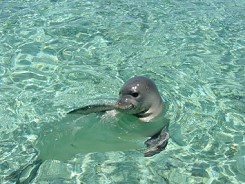
The Mediterranean monk seal is thought to be the world's rarest sea mammal - current estimates suggest that there are only 500 monk seals in
the Mediterranean and 250 of them live in the waters around Greece, including Zante. The seals are brown or dark grey in colour with a lighter coloured belly. They can reach 2.5 m in length and weigh up to 320 kg. The females give birth to their young in secluded caves and most seals are born in autumn. The baby seals stay in the caves for the first two weeks of their life before they enter the water. They reach reproduction age about four years old and they can have babies every other year. The seals are thought to live to be over 20 years old.
Their diet consists of fish, octopus and other seafood. They face extinction largely due to the action of humans, for the overdevelopment of beaches and coves, fishing which has reduced the amount of food available for the seals and also has caused them many accidents (even resulting in death) from becoming entangled in fishing nets. Steps need to be taken to ensure that the seals have protected breeding grounds and to educate the local fishermen and tourists to prevent the species from becoming extinct.
In the past monk seals were considered a good omen to sailors and fishermen. The ancient Greeks had such respect for the seals that they declared them protected by the Gods Poseidon (sea) and Apollo (sun), due to the seals love of both the sun and the sea. Also one of the first Greek coins (dating from 500BC) was engraved with the head of a monk seal and they have been the subject of many famous writers including Aristotle and Homer. The seals have a prestigious history but let's hope that soon the species is not history too.










 Accommodation with